
Choosing Your Journey
In the Ballroom and Latin scene there are two distinct streams of dancing taught by studios: social and competitive. In our 'Studios' section you will be able to see which kind is offered at different studios. Below we explain more of what each entails.
Social Dancing
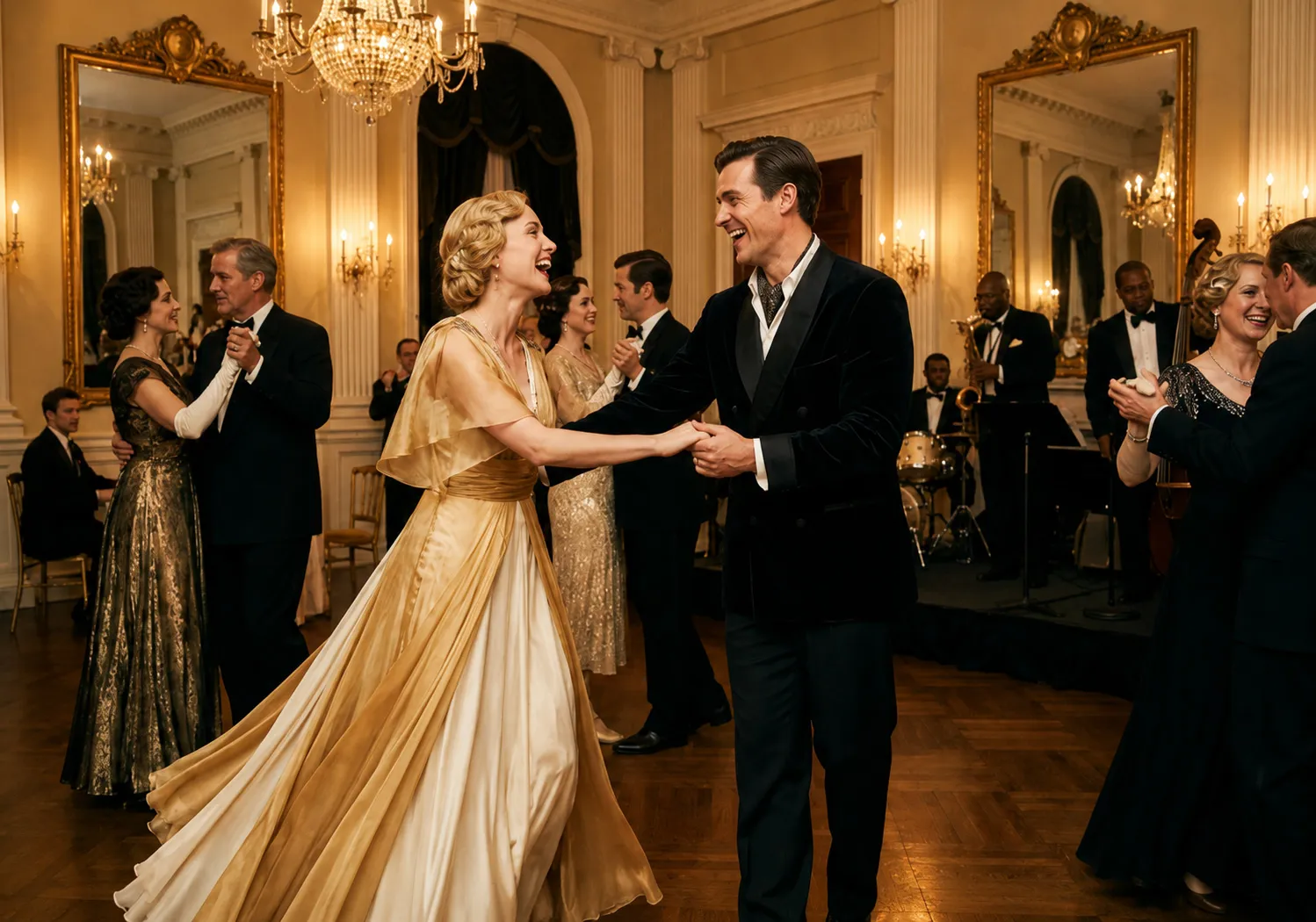
Social dancing is about connection before perfection. You learn enough technique to move comfortably, safely and musically with another person. The goal is not to impress a judge. The goal is to enjoy the music and be able to dance with friends and strangers. In this relaxed yet elegant environment, the emphasis is on lead-and-follow dynamics and musicality, allowing dancers to navigate any floor with confidence.
Studios offering social classes typically have progression levels: Beginner, Intermediate, Advanced, Pre-Bronze, Bronze, Silver and Gold. These are flexible, and are not formally tested unless you decide to do a medal test (see below).
Competitive Dancing
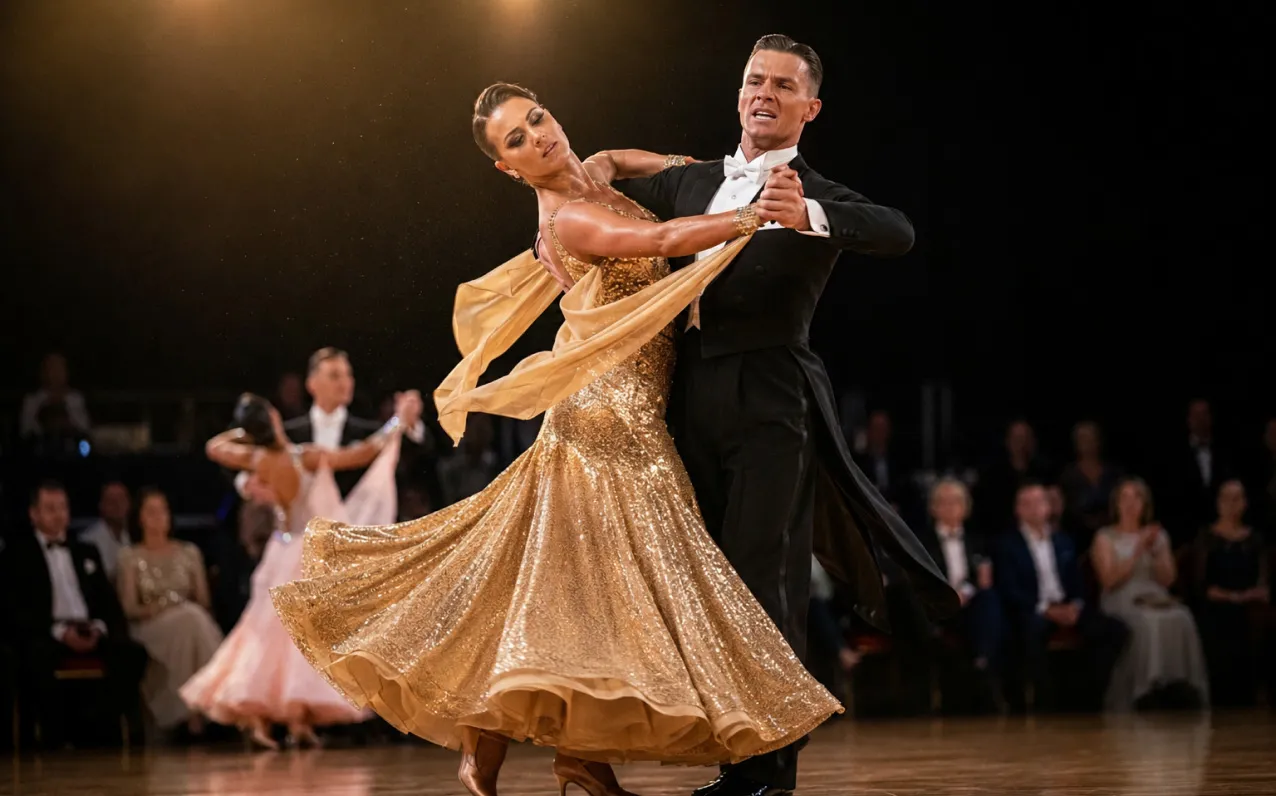
Competitive dancing is a sport that lives at the intersection of creative art and technical athleticism. It requires both discipline and heart. Dancers are judged against other couples or solo dancers according to technique, timing, posture, movement quality, partnering, musicality, presentation and floorcraft.
In Ballroom and Latin competitions, levels are often arranged from syllabus levels into open competitive sections. As the levels go up, more dances and figures are allowed. A typical structure includes:
- Beginner / Level 1 — Entry-level competitions for new dancers, with simpler figures. Waltz; Cha-Cha.
- Bronze / Level 2 — Early syllabus level. Typically 2–3 dances. Waltz, Quickstep; Cha-Cha, Jive.
- Silver / Level 3 — Broader syllabus level with improved technical detail. Waltz, Quickstep, Tango; Cha-Cha, Jive, Rumba.
- Gold / Level 4 — Advanced syllabus level before moving into open competitive sections. Waltz, Quickstep, Tango, Slowfox; Cha-Cha, Jive, Rumba, Samba.
- Novice — First open competitive level beyond the structured syllabus levels. (All 10 dances — 5 per section) Waltz, Quickstep, Tango, Slowfox, Viennese Waltz; Cha-Cha, Jive, Rumba, Samba, Paso Doble.
- Rising Star — A developing open section for dancers progressing toward higher-level competition.
- Pre-Championship — Higher open level for dancers preparing for full championship-level dancing.
- Championship — Highest amateur competitive section.
- Professional — For professional dancers, teachers, and competitors in the professional section.
The dances in each level differ between federations - remember to check before entering a competition.
Medal Tests
Bridging the gap between social and competitive is the structured medal test system. This recognised certification framework allows dancers to track their technical progress through formal examinations, earning bronze, silver, and gold distinctions as they master their craft. This is typically for social dancers who want to focus more on technique and syllabus work, and is a great stepping stone towards the competitive world.